Securing ultra-heavy palletized loads is one of the most critical stages in the global industrial supply chain. When transporting heavy metals, construction materials, large industrial machinery, or bulk export products, standard packaging solutions fall short. Failing to properly secure these loads leads to catastrophic shift damages, safety hazards, and massive financial losses during transit.
To address these challenges, heavy-duty industrial sectors are shifting away from manual binding methods and adopting fully automated systems. Among these advancements, thread-through high-tensile steel strap bonders have emerged as a revolutionary solution, fundamentally changing how high-mass pallets are stabilized and transported globally.
The Operational Challenges of Ultra-Heavy Pallets
Managing ultra-heavy loads (often weighing between 1.5 to over 5 tons per pallet) presents unique difficulties for warehouse operators and logistics managers. Traditional strapping methods face major bottlenecks:
- Inconsistent Tensioning: Manual and pneumatic tools often yield inconsistent strap tension, which can loosen during long-distance transportation.
- Pallet Damage: Hard-to-reach pallet voids make it difficult for operators to feed straps under the load, resulting in skipped straps or improper securing.
- Labor Inefficiency: Manually threading steel straps is physically demanding, slow, and poses serious safety risks to operators handling sharp metal edges.
How Thread-Through High-Tensile Steel Strap Bonders Work
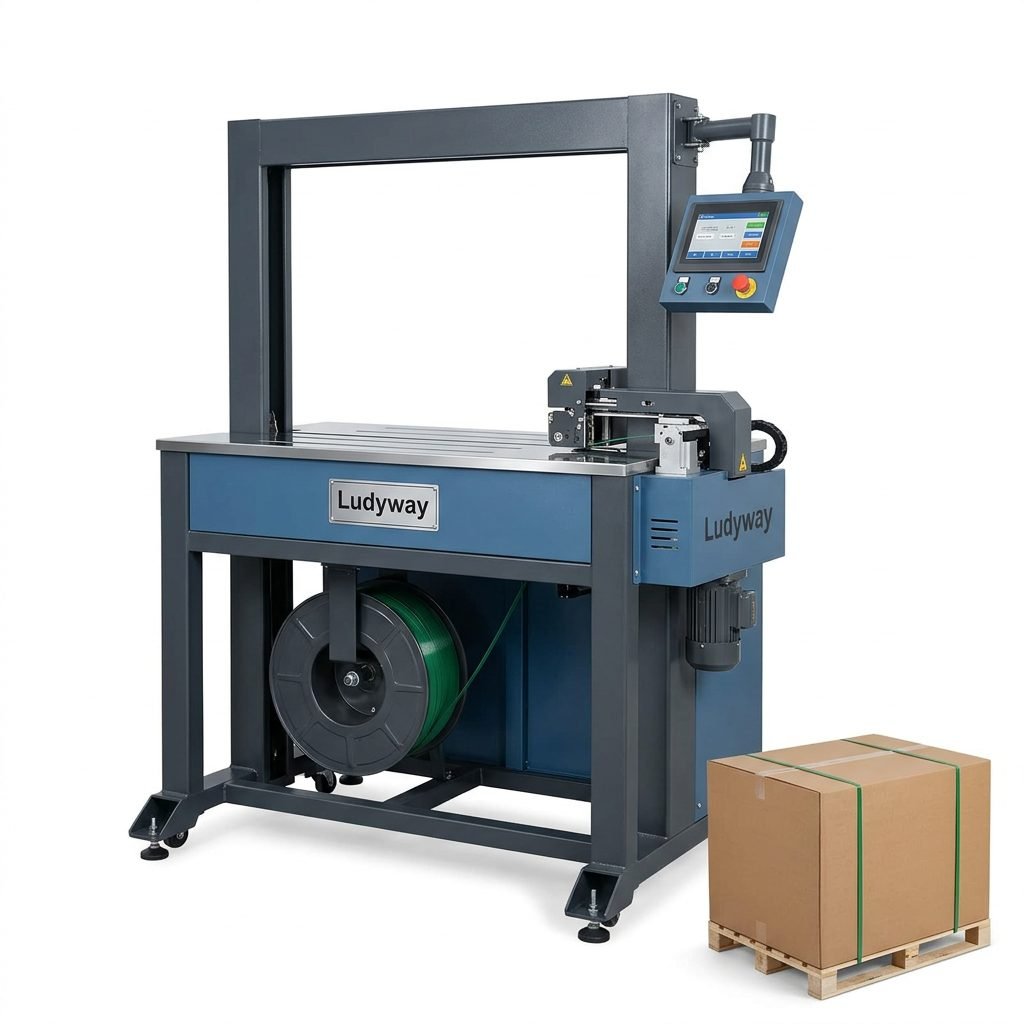
The core technology behind modern heavy-duty strapping machines lies in their automatic “thread-through” mechanism. Instead of relying on manual labor to feed the strap through pallet channels, these systems utilize a motorized bayonet or lance system.
As the pallet moves along the conveyor line and stops at the strapping station, the machine’s guide track automatically extends a mechanical lance through the pallet’s bottom structure. The high-tensile steel strap is fed through this lance, wrapped around the top and sides of the load, and retrieved on the opposite side. Once the loop is complete, the lance retracts, and the bonder applies high-tension sealing, cutting, and welding within seconds.
A Comparison of Strapping Methods for Heavy-Duty Pallets
To understand why automated steel strap bonders are transforming the industry, it is helpful to compare them to alternative packaging configurations:
| Strapping Method | Max Load Capacity | Tension Reliability | Automation Level | Worker Safety |
|---|---|---|---|---|
| Manual PET / PP Strapping | Low to Medium (< 1,000 kg) | Inconsistent | Manual | Low (Risk of strain/accidents) |
| Automatic Plastic Strapping | Medium (Up to 1,500 kg) | Moderate | Semi-Automatic | Medium |
| Thread-Through Steel Bonder | High (Over 5,000 kg) | Extremely High | Fully Automatic | Excellent (Zero contact) |
Key Industry Benefits of High-Tensile Steel Strap Bonders
Upgrading to an automated thread-through steel strapping machine delivers immediate operational and financial advantages:
1. Superior Load Integrity and Zero Stretch
Unlike plastic materials, high-tensile steel straps do not stretch or warp when subjected to extreme temperatures, sharp edges, or sudden shifting forces. This ensures that heavy metal pipes, steel coils, or concrete blocks remain rigidly fixed throughout transit, preventing shifting in cargo holds or shipping containers.
2. Maximized Packaging Speed and Throughput
Manual strapping of a single heavy pallet can take up to five minutes. A fully automated thread-through strapping machine completes the entire feeding, tensioning, sealing, and cutting cycle in under 30 seconds. This allows high-output manufacturing facilities to maintain continuous production flows without packaging bottlenecks.
3. Reduced Workplace Injuries
Steel strapping can be hazardous to handle manually due to the tension required and the sharp nature of the material. By automating the threading and sealing process, operators remain at a safe distance from the active packaging zone, significantly reducing the risk of workplace injuries.
Integrating Strapping into Turnkey Packaging Lines
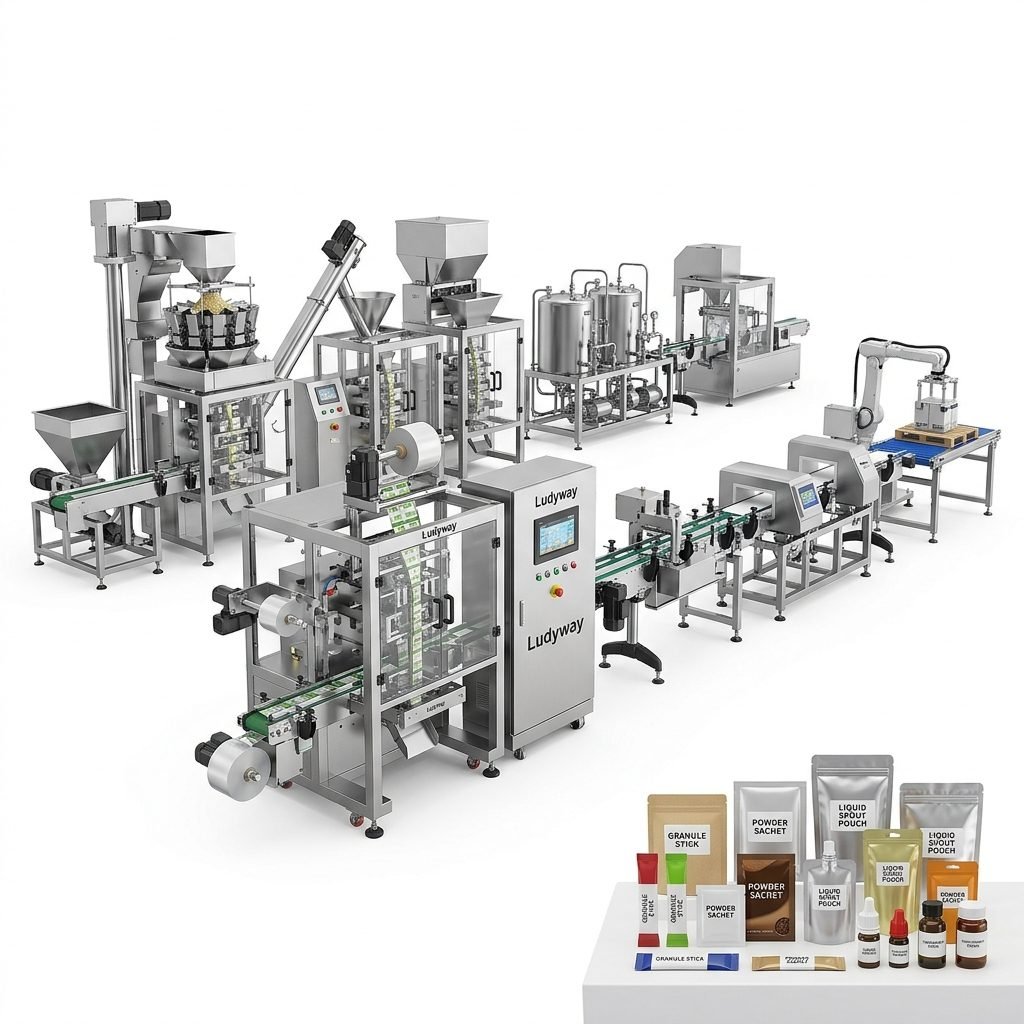
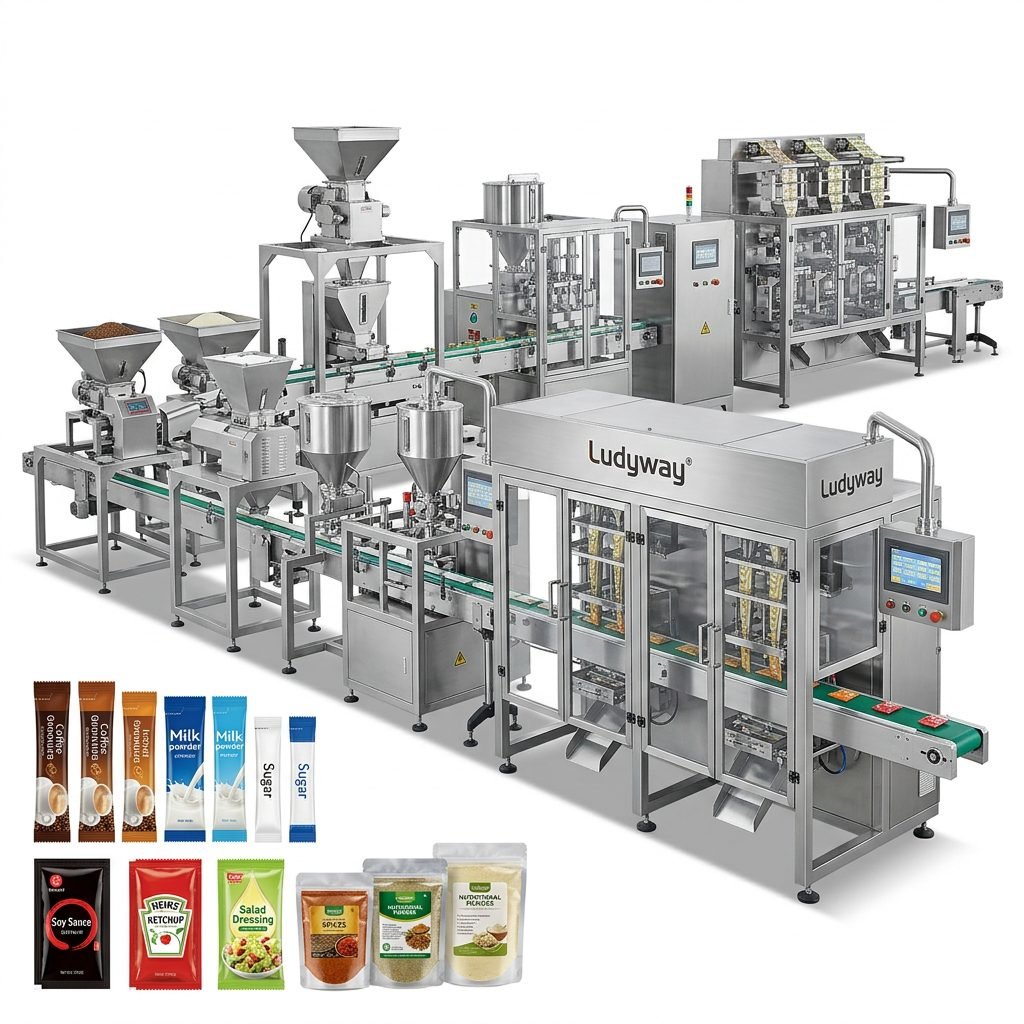
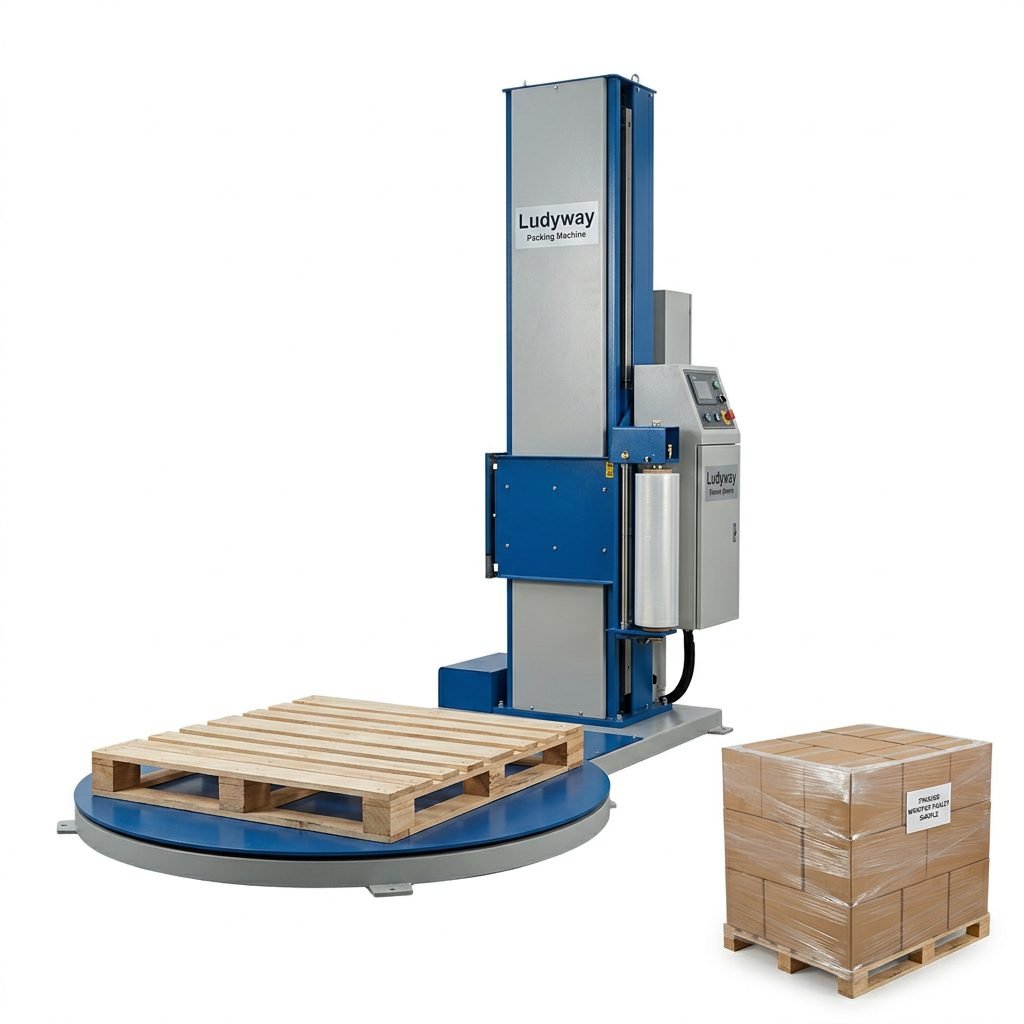
To fully capture the benefits of automatic strapping, manufacturers are increasingly incorporating these machines into fully integrated packaging lines. When coupled with heavy-duty roller conveyors, industrial pallet wrappers, and robotic palletizers, the entire end-of-line packaging process becomes seamless and touchless.
As a global leader in industrial automation, Ludyway provides advanced turnkey packaging lines engineered to streamline transport preparation. By combining high-speed vertical and horizontal strapping units with customized material handling systems, the company helps global enterprises optimize their packing efficiency, minimize product damage, and lower labor costs.
Conclusion: The Future of Heavy Industrial Packaging
As global supply chains place higher demands on safety and speed, traditional manual strapping methods are becoming obsolete. Thread-through high-tensile steel strap bonders represent the future of industrial logistics, offering unmatched load security, process reliability, and operational speed. Investing in automatic strapping technology ensures that even the heaviest, most challenging cargo arrives at its destination safely and securely.