Selecting the right automatic laundry packing solution is a critical decision for any commercial laundry operation, detergent manufacturer, or hospitality service provider. An efficient laundry packaging machine not only streamlines your production line but also ensures product integrity, enhances brand presentation, and optimizes operational costs. This guide will walk you through the key factors to consider when choosing the best system for your specific needs.
Understanding Your Laundry Packaging Needs
Before diving into machine specifications, a thorough assessment of your operational requirements is essential. The type of laundry product you handle—be it liquid detergent pods, powder detergent sachets, or fabric conditioner sticks—dictates the core technology you need.
Key Consideration:
Product Form: Granules, powders, and liquids each require different dosing, filling, and sealing mechanisms. A machine designed for powder will struggle with a viscous liquid, and vice versa.
Furthermore, you must evaluate your required output speed (packs per minute), the desired package style (stick pack, sachet, pillow pack), and the level of automation integration needed with your existing production line.
Core Machine Types and Technologies
The market offers several types of automatic laundry packing machines, each suited for different scales and product types.
Vertical Form-Fill-Seal (VFFS) Machines
Ideal for granular and powdered products like laundry powder or baking soda for cleaning. These machines form a bag from a roll of film, fill it with a pre-measured dose, and seal it—all in a continuous vertical motion. They are highly efficient for medium to high-volume production.
Horizontal Form-Fill-Seal (HFFS) Machines
Often the preferred choice for liquid laundry pods and single-dose detergent sachets. HFFS machines create pouches in a horizontal plane, which can be better for heat-sensitive materials or products that need to be laid flat for branding and stability.
Multi-Lane Stick Pack Machines
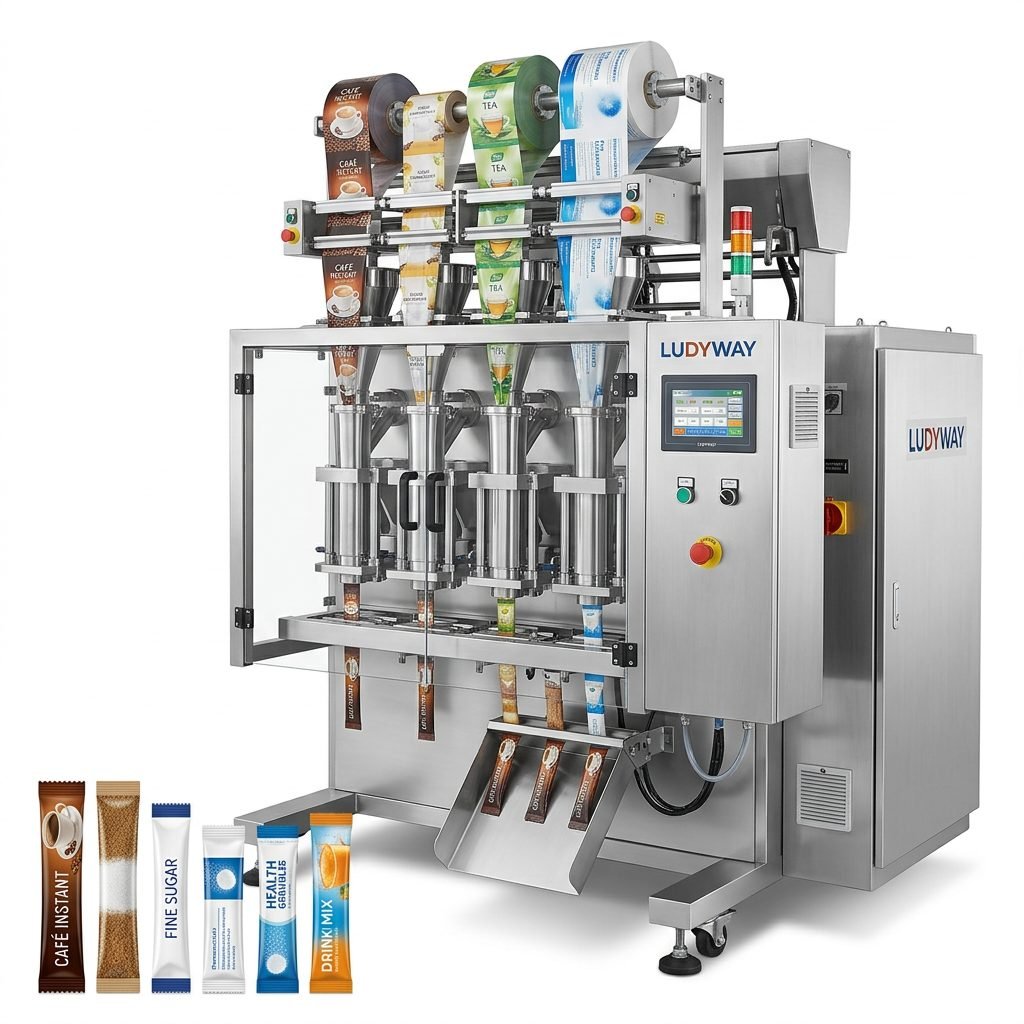
For operations focusing on high-speed production of small, elongated packets—perfect for single-use liquid detergent or fabric softener sticks. These machines run multiple packaging lanes simultaneously, dramatically boosting output. For insights into advanced multi-lane systems, you can explore innovative sachet packaging solutions that enhance efficiency.
Critical Features for Selection
Beyond the basic type, several features separate a standard machine from a superior, future-proof investment.
1. Accuracy and Dosing System
The heart of any packaging machine. Look for servo-driven auger fillers for ultra-precise powder dosing, or precision piston pumps for liquids. Inconsistent fills lead to product giveaway and customer dissatisfaction.
2. Sealing Integrity and Film Compatibility
A strong, consistent seal is non-negotiable to prevent leaks, especially for liquid products. Ensure the machine’s sealing jaws (often made from durable materials like ceramic or chrome-plated steel) can handle your specific packaging material, whether it’s laminated film, aluminum foil, or recyclable mono-material.
3. Control System and Ease of Use
A user-friendly HMI (Human-Machine Interface) with recipe storage allows for quick changeovers between different products or package sizes. Modern PLC-based controls with diagnostic capabilities minimize downtime.
4. Hygiene and Cleanability
Laundry products can be corrosive or dusty. Machines with stainless steel contact parts, smooth surfaces, and easy-access panels for cleaning are crucial for maintaining product purity and meeting health standards.
The Importance of Supplier Expertise and Support
The machine itself is only part of the solution. The manufacturer’s expertise and support network are equally vital for long-term success.
Partnering with a supplier like Ludyway Machinery, which brings over 30 years of industry experience, provides significant advantages. Their deep understanding of packaging challenges across the food, pharmaceutical, and daily chemical sectors translates into reliable, tailored solutions for laundry products. A supplier with a strong engineering background can offer crucial customized automation solutions to integrate the packer seamlessly into your line.
Always inquire about after-sales service, availability of spare parts, training provisions, and the supplier’s ability to provide a complete turnkey production line if needed. A reliable partner ensures your machine remains productive for years to come.
Making the Final Decision: A Checklist
Use this concise checklist to evaluate potential laundry packaging machines and suppliers:
- ✓ Product Match: Does the machine handle your specific product form (liquid, powder, granule) effectively?
- ✓ Speed & Output: Does the machine’s maximum speed meet your current and projected future output requirements?
- ✓ Flexibility: How quick and easy is it to change over package sizes or materials?
- ✓ Build Quality: Is it constructed from durable, corrosion-resistant materials (e.g., food-grade stainless steel)?
- ✓ Total Cost of Ownership: Consider energy consumption, maintenance needs, and potential downtime, not just the purchase price.
- ✓ Supplier Reliability: Does the manufacturer have a proven track record, strong technical support, and a global service network? Reviewing a detailed company profile can provide this insight.
Frequently Asked Questions (FAQs)
Q1: What is the main difference between vertical (VFFS) and horizontal (HFFS) laundry packers?
A: The primary difference is the orientation of the bag formation. VFFS machines are typically more space-efficient and excellent for free-flowing granules/powders. HFFS machines are often preferred for liquids, heat-sensitive products, or when a flat, stable pouch with excellent graphical presentation is required.
Q2: How can I ensure the packaging seals won’t leak with liquid laundry pods?
A: Leak-proof seals depend on the correct combination of packaging film, sealing temperature, pressure, and dwell time. Choose a machine with precise, adjustable heat control and robust sealing jaws. Working with your film supplier and machine manufacturer to test the material on the specific equipment is the best practice.
Q3: What production speed (packs per minute) should I expect from an automatic laundry packing machine?
A: Speeds vary widely based on machine type and package size. A single-lane stick pack machine may run at 60-120 packs/minute, while a multi-lane system can exceed 600 packs/minute. For standard sachets, speeds of 80-200 packs/minute are common. Your required output will determine the necessary machine configuration.
Q4: Can one machine package different types of laundry products (e.g., powder and liquid)?
A: Generally, no. Powder and liquid filling require fundamentally different dosing systems (auger vs. piston pump). While some machines offer modular designs allowing for changeover, it is often more efficient and cost-effective to use dedicated machines for different product forms to maintain high accuracy and avoid cross-contamination.
Q5: Why is supplier experience in the pharmaceutical or food industry relevant for laundry packaging?
A: Industries like pharmaceuticals and food have the most stringent requirements for hygiene, accuracy, and equipment reliability. A supplier experienced in these sectors brings a culture of precision, high-quality manufacturing standards, and robust validation processes. This expertise directly translates into building more reliable, cleanable, and accurate machines for the laundry sector, ensuring long-term performance and compliance with quality standards.